
If the letter asks you to remove, move, or store your hoop, fix it quickly and send a short written response. If you disagree, send a written request for clarification and a hearing instead. Either way, start the same day: read the cited rule, note the cure deadline, photograph the setup, and save the original letter.
TL;DR:
- Check whether the cited rule governs storage, placement, or permanence, and ask for the exact provision when the notice uses vague wording or cites none.
- Send a one page response with your plan, evidence, and request for written confirmation after photographing the hoop and noting the cure deadline.
- California requires at least 10 days’ written notice before the board meeting that considers discipline, and written notice of its decision within 14 days.
- Request a hearing or mediation before hiring counsel; consult an attorney if the HOA threatens an injunction, large fines, or challenges prior approval.
- Ask for copies of past approvals and architectural guidelines; longstanding neighborhood practice or written approval can matter if the board enforces the rule selectively.
HOA Letter AIWrite a Clear HOA ResponseHOA Letter AI helps homeowners create clear, professional compliance letters with guided drafting, state-specific context, community rules, and built-in checks.Draft a compliance letter
Table of Contents
- How do you read the violation language correctly?
- How do you write the response letter?
- What should you do in the first 30 days?
- What must a board do before it can penalize you?
- When should you escalate?
- Why does a calm, specific tone work best?
- How we help you draft a compliant response
- FAQ
- Sources
How do you read the violation language correctly?
Many notices lump three different issues together: where the hoop is stored, where it is placed, and whether it is permanent or portable. A rule that bans permanent hoops says nothing about a portable unit rolled into the garage overnight. A rule about “front of the garage” placement says nothing about a hoop on the side yard. Practitioner guidance from one HOA’s governing document points out that letters often blur these categories, and that simple cures like collapsing a portable unit, moving it, or storing it are often enough.
Watch for phrasing like these:
- “Unsightly” or “objectionable”: a subjective word that needs a written standard behind it.
- “Visible from the street”: it matters whether the rule restricts visibility or only bans permanent installation.
- “Must be removed immediately”: check whether the rule gives a cure period before any penalty.
- No rule number cited: ask the board to identify the exact section.
- Extra language not in the rulebook: one homeowner reported a letter with made-up wording that the official rules never contained.
Quote the exact rule line in your reply, or ask the board to send the rule text. Whether an association can fine you at all depends on your governing documents, so read your CC&Rs before you concede anything.
How do you write the response letter?
Keep it to one page. Include these elements, in this order:
- Date and your property address.
- The rule citation from the notice, quoted exactly, or a request that the board verify it.
- Your plan: what you will do and by what date, or why you dispute the violation.
- Attachments: dated photos, receipts, and any prior approval letter.
- Contact information and a request for written confirmation that the board received your letter.
Three short sample lines you can adapt:
- Immediate cure: “I received your notice dated [date]. I have moved the portable basketball hoop into my garage as of [date]. Please confirm in writing that this resolves the matter.”
- Clarification and hearing: “Your notice does not cite a specific provision. Please send the exact rule text and schedule a hearing before any further action.”
- Prior approval or long-term presence: “This hoop has been in place since [date] with no prior objection, and I have attached [approval letter or dated photos]. Please confirm whether the association is withdrawing the notice.”
Approval paperwork matters. In one reported news case, a family’s approved hoop later had its approval revoked, and the wording of the original approval became central to the dispute.
Pro Tip: Send the letter by certified or tracked mail and keep a copy; our California response guide walks through the same steps.
What should you do in the first 30 days?
- Day 0: Save the letter and envelope, photograph the hoop from several angles, and find the cited section in your CC&Rs.
- Day 1 to 3: Note the cure deadline on your calendar and decide whether you will cure or contest.
- Day 1 to 7: Send your short written response by tracked mail. If a quick temporary cure is possible, such as collapsing or storing a portable unit, do it and photograph the result.
- Day 1 to 7: Ask in writing for copies of any prior approvals or architectural guidelines the association holds on your property.
- Week 2: Follow up if you have no reply, and request a hearing if you are contesting.
- Week 3 to 4: Keep a log of every call, email, and letter, and ask the board to confirm in writing that any cure you made is accepted.
Our hearing notice guide explains what to expect at a hearing.
What must a board do before it can penalize you?
A board should identify the governing rule and follow the notice and hearing steps your documents and state law require. California offers a concrete example. Civil Code section 5855 requires at least 10 days’ written notice before the board meeting that considers discipline, and written notification of the decision within 14 days. The same statute says that failing to follow these steps can make the disciplinary action ineffective.
Non-compliance with these notice requirements can render the disciplinary action ineffective against the member.
Other states have their own rules, so check our state-by-state hub for yours.
Selective enforcement is the other common issue. If a neighborhood has tolerated hoops for years, enforcing against one owner looks arbitrary. Legal practice guidance notes that when documents prohibit permanent hoops but some already exist, a board can adopt a grandfathering resolution drafted with counsel, enforcing the rule going forward. Recorded guidelines and prior approvals also shape outcomes in court: a reported Maryland case involved an association seeking an injunction to remove a hoop from the front of a property.

When should you escalate?
Start cheap. Request a hearing, ask for mediation or your association’s internal dispute resolution process, and rely on written, dated evidence. Many hoop disputes end there, especially when you offer a specific cure date.
Talk to an attorney when the association threatens a court injunction, large fines, or when a prior approval is being contested. If you are in Utah, one option is a litigation firm that handles contract disputes, including enforcement and negotiation.
Weigh cost against payoff. Storing a portable hoop for a few weeks costs almost nothing. A legal fight over a hoop you could keep with a modest adjustment rarely pays for itself.
Why does a calm, specific tone work best?

In my view, the most effective responses are short, specific, and cooperative. Offer a cure date, attach dated evidence, and ask for a hearing only if you truly disagree. Boards tend to escalate when they feel ignored or attacked, and to settle when a homeowner hands them an easy yes.
Aim to keep the hoop, not to win an argument. A letter that proposes a compromise, such as a portable unit stored out of sight overnight, often preserves your basketball setup while ending the dispute. Keep every confirmation, email, and receipt, because the paper trail is your real leverage.
— Blake
How we help you draft a compliant response
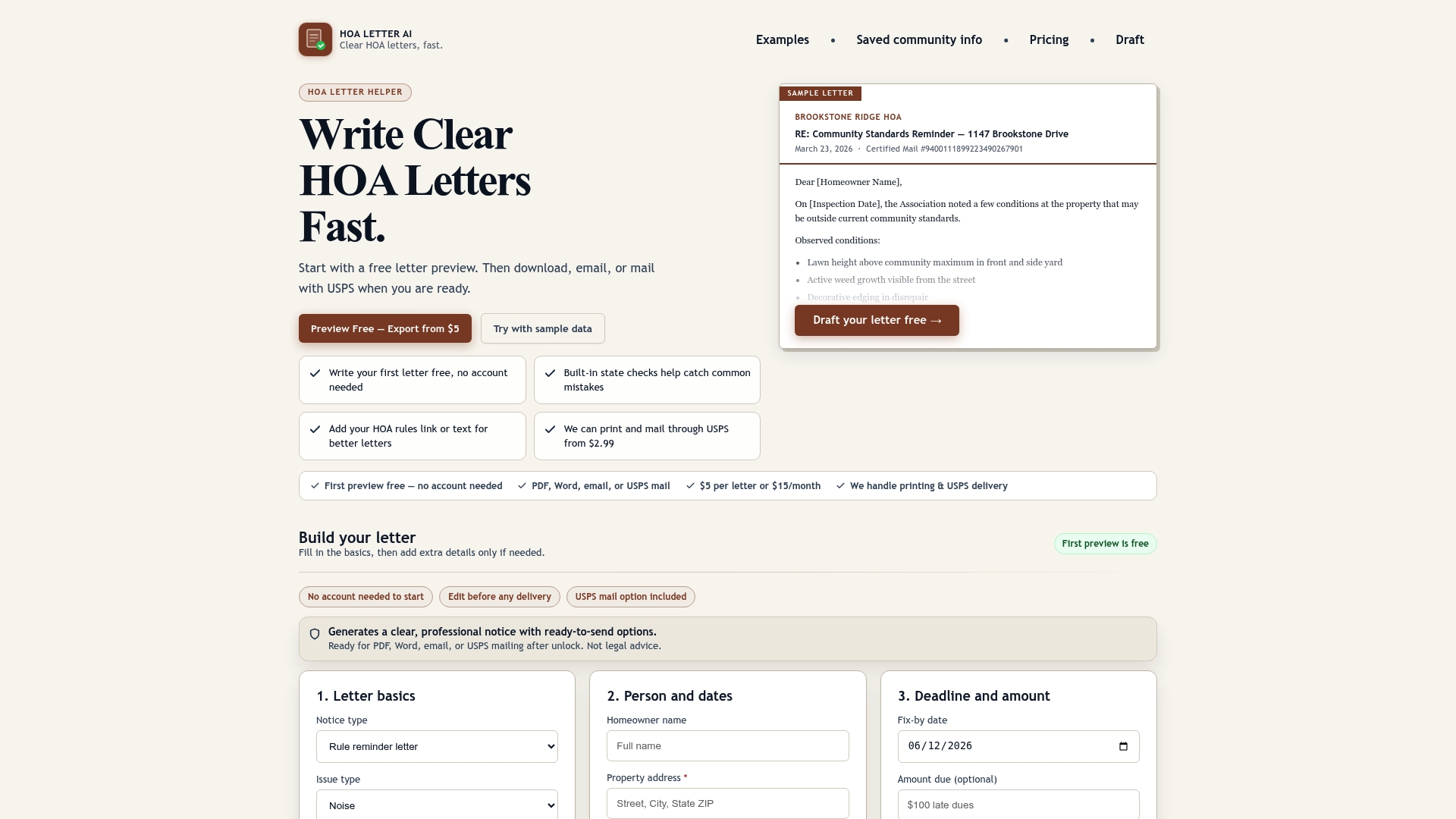
When a deadline is running, a clear letter beats a perfect one. We built HOA Letter AI to produce state-aware homeowner response letters you can preview for free before paying a one-time fee to finalize them.
- Include the correct rule citation and your evidence in your response
- Meet the board’s deadline with a ready draft
- Add optional USPS mailing from $2.99
Homeowner responses are $5 one-off. Generate your free preview on our pricing page and unlock the letter when it reads right.
This article is general information, not a substitute for advice from a qualified lawyer. Consult a qualified legal professional about your own circumstances before acting on anything here.
FAQ
Can you have a basketball hoop in your driveway?
Often yes, but it depends on your governing documents and local rules. Many HOAs restrict permanent hoops, street placement, or overnight visibility, so check your CC&Rs before installing one.
What should you do if the HOA won’t enforce its rules?
Document the issue and send a written request to the board citing the specific rule. Boards can enforce unevenly, and uneven enforcement can also weaken a later action against you.
Is a basketball hoop required to be 10 feet high?
Standard hoops are set at 10 feet, but an HOA letter is about placement and permanence, not rim height. A portable unit can usually be lowered or stored if the rule requires it.
What is a goal in basketball?
A goal is a made shot, and many people also call the hoop and backboard “the goal.” HOA documents often use “basketball goal” to mean the equipment itself.